REVIEW · KANDY
Kandy Village Cooking Class
Book on Viator →Operated by Kandy Village Cooking Class · Bookable on Viator
One taste of Sri Lankan curry starts in a market. In Kandy, this village cooking class pairs a hands-on ingredient shopping trip with real lessons in what goes into comfort food, taught by Shyama and her family.
I especially like the way you get involved early: you learn what to pick and why, then you cook a full traditional meal. The hospitality feels personal, not scripted, and the results are the kind of food you remember on day three back home.
The only real drawback to plan for is logistics: one review noted you might need to arrange your own return transportation (or pay extra) after the class. Also, if you have a serious dietary need like celiac disease, don’t assume there will be a true gluten-free menu.
In This Review
- Key things I’d bet on in this Kandy cooking class
- Kandy Village Cooking Class: why this works so well
- Kandy stops on the way: city sights before the cooking work
- Market visit: your ingredient hunt (and your spice training)
- From the market to the village: welcome that feels like family time
- Village cooking class: what you actually do with your hands
- What you’ll cook and eat: curries, choices, and the sweet finish
- Timing and getting home: plan for the one annoying unknown
- Price and value: $25 for market + cooking + a full meal
- Who should book this class in Kandy (and who should ask extra questions)
- Should you book the Kandy Village Cooking Class?
- FAQ
- How long is the Kandy Village Cooking Class?
- Where does the experience start and end?
- Does the class include a market visit?
- Can I choose chicken or fish?
- What happens after the market visit?
- Are Kandy Lake Club cultural dance show and the Temple of the Sacred Tooth Relic included?
- Is pickup offered, and how many people are in a group?
Key things I’d bet on in this Kandy cooking class
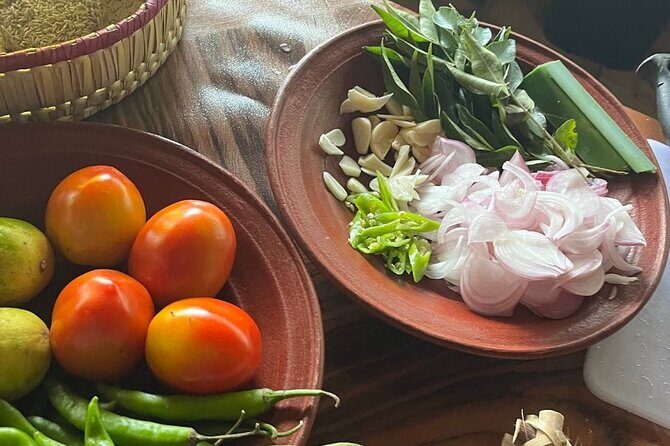
- Market shopping first: you select five vegetables plus either chicken or fish, with spice explanations along the way
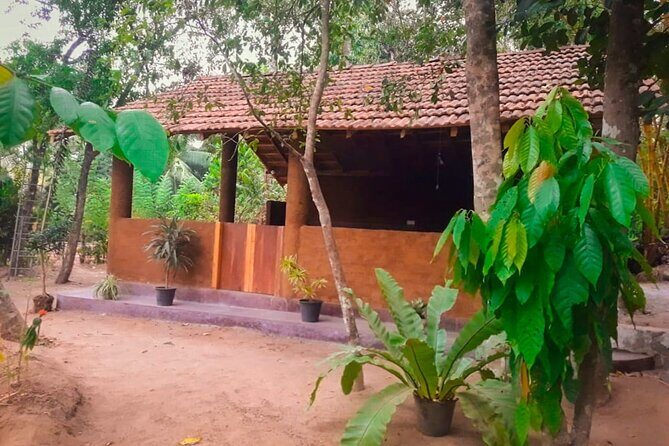
- Shyama teaches in the family kitchen: hands-on cooking with lots of real-time guidance
- You cook, then you eat: a complete traditional meal, not just samples
- It’s small: up to 15 people, so it feels more like a group project than a demo
- It includes a brief local-village look: a little taste of daily life beyond the kitchen
Kandy Village Cooking Class: why this works so well
If you’ve ever taken a cooking class that felt like theatre, this one is the opposite. The whole point is that you do the work: choosing ingredients, preparing them, cooking them, and then tasting what you made. You’re not just learning recipes. You’re learning the logic behind Sri Lankan flavors.
I also like how the experience is anchored in Kandy rather than floating as a generic cultural activity. The day doesn’t feel like you’re dropped into a workshop. It starts with the food supply chain (market shopping) and then moves into a village setting where cooking is practical, not performative.
And yes, the food is the headline. But the best part is how quickly your brain starts connecting tastes to ingredients. Once someone shows you which vegetables to buy and how spices behave in a pot, you’ll never look at curry powder the same way again.
More Sri Lankan Cooking Classes in Kandy & Sri Lanka's Hill Country

Kandy stops on the way: city sights before the cooking work
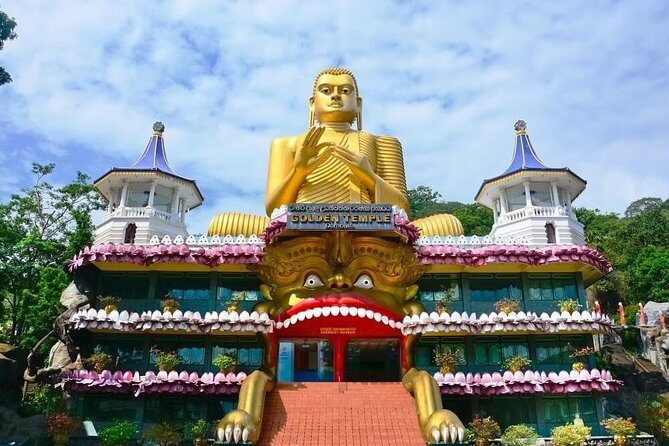
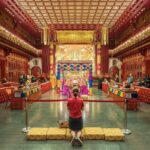
The itinerary includes a series of Kandy highlights that break up the day and give context for where you are. Expect stops around Kandy’s core sights—Kandy Lake, a view point, and a stop at Kandy Lake Club for a cultural dance show. The route also lists Kandy District and Kandy itself, plus the Temple of the Sacred Tooth Relic.
Since the overall duration is about 3 hours, these aren’t likely to be long museum-style visits. Think short stops and movement between points, enough to get bearings and add atmosphere before you focus on dinner.
Why this matters: Sri Lankan cooking isn’t just spices in a bowl. It’s a way of life. Seeing a bit of Kandy culture and the sacred temple area (even briefly) helps the later village-kitchen lessons feel more grounded and less like a tourist activity.
Market visit: your ingredient hunt (and your spice training)
The experience begins at the Kandy Municipal Central Market, at the meeting point listed near 144 Central Market, Kandy 20000, Sri Lanka. If pickup is offered for your booking, you’ll be taken to the market for the ingredient part.
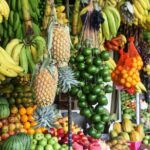
At the market, you’ll guide your choices. You select five vegetables from what’s available, and you also choose chicken or fish. This matters more than people expect. Sri Lankan curries often depend on the exact vegetable and the stage it’s in. If you’ve ever had a curry at one place taste totally different from another, this is one reason why.
You’ll also get explanations about spices and other ingredients in the market. In practice, this turns a shopping trip into a quick education. You start noticing things you’d normally walk past: spice forms, how ingredients are grouped, and what sellers seem to recommend together.
And because you’re buying what you’ll cook, the market phase keeps the class feeling real. It’s not, I bought ingredients and now someone explains them. It’s, I chose this, now let me show you how it becomes dinner.
One extra plus: the reviews repeatedly mention that the market walk is lively and informative, and that it helps you understand what you’re about to cook. If you want to leave with both flavors and confidence, this is the stage that builds it.
From the market to the village: welcome that feels like family time
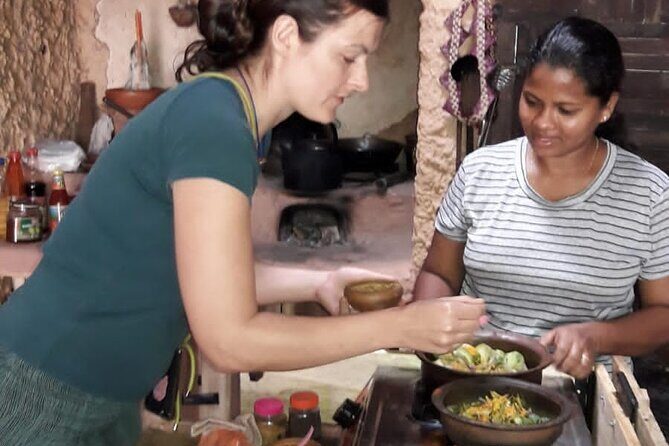
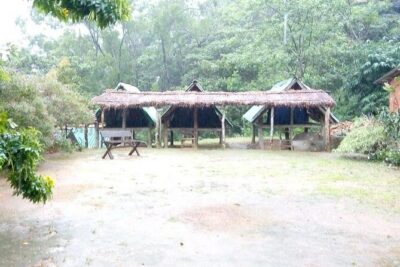
After shopping, you head to the village cooking setting. The class is built around a traditional village kitchen and includes a brief visit to a nearby village, so you’re not stuck only in the cooking space.
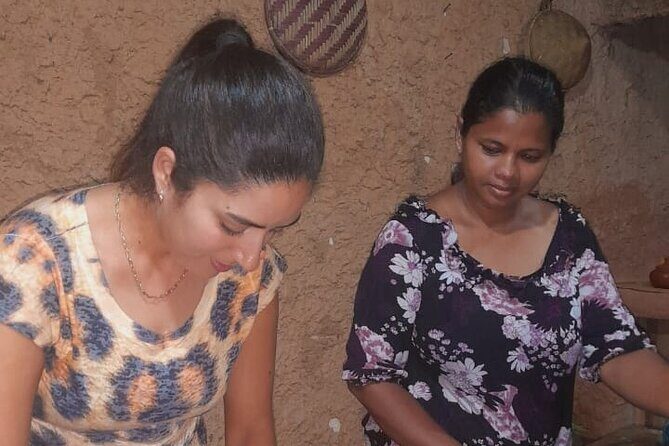
What stands out from the experience descriptions and reviews is the warmth. People describe a welcoming host family and a setting that feels lived-in rather than staged. Shyama is mentioned by name in multiple reviews, along with her husband, and the teaching style comes through clearly: clear explanations, patient answering of questions, and lots of encouragement as you get your hands working.
You’ll likely cook with a group size that stays small (max 15). That size hits a sweet spot. You can participate without feeling lost in a crowd.
Also, practical note: the class includes pickup offered, and the experience ends back at the meeting point. Service animals are allowed, and the area is described as near public transportation, which can matter if you’re not relying on a driver for everything.
Village cooking class: what you actually do with your hands
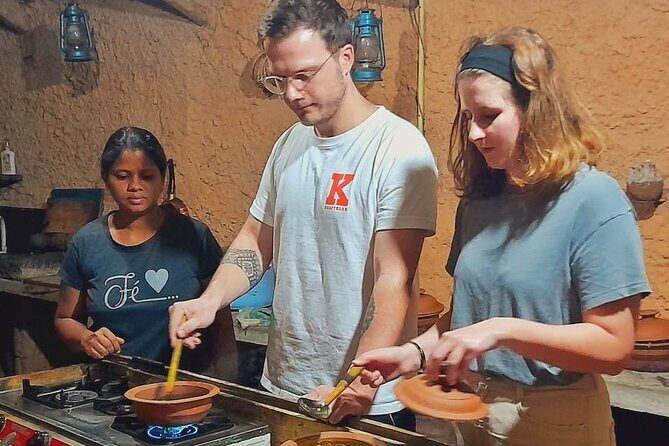
This is a true cooking class, not a sit-and-watch show. You’ll be guided through the preparation and cooking of authentic dishes. In the kitchen, you learn what to do step-by-step rather than just being handed a recipe card and told good luck.
Based on reviews, you can expect a lot of active participation—everyone seems to have a role, from prep to stirring and tasting. People specifically mention learning about spices, coconut milk (often made from scratch), and methods that feel traditional rather than simplified for tourists.
One review describes the teaching as hands-on with the questions handled as you go. That’s what you want in a class like this: you mess up a little, ask a question, and the teacher adjusts in real time.
And there’s a nice rhythm to it. The day starts with choosing ingredients, then you cook. When you’re finally eating, you’re not just tasting food—you’re checking your own work.
Other cooking classes in Kandy

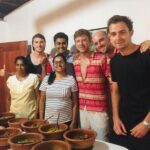
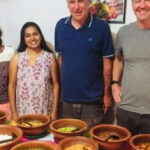
What you’ll cook and eat: curries, choices, and the sweet finish
The class centers on Sri Lankan cooking with a curry-heavy focus. You’ll have time to make a complete traditional meal, and you’ll also get to taste the delicious food you cook.
In terms of what dishes show up, reviews give a pretty clear picture:
- Many people report cooking a long list of curries and sides, often around 8 to 11 dishes, depending on how the group runs
- Curries mentioned include options like special aubergine curry and chicken curry
- Some reviews mention sambal and other spicy accompaniments
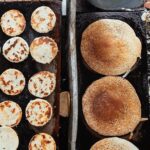
- A sweet ending shows up too: caramel coconut pancakes appear in more than one review
Important reality check: you can’t assume you’ll cook the exact same lineup as someone else. But the structure stays consistent: you choose your key protein (chicken or fish), you work with the vegetables you selected, and you learn how to build flavor with spices and coconut.
If you want to take something home, look for the practical pieces: how coconut milk is made, how spices are handled before they hit the pot, and how the balance of heat and sweetness lands. People say they leave with recipes, which is exactly what makes the class useful after your trip.
Timing and getting home: plan for the one annoying unknown
The tour runs about 3 hours (approx.), and it includes a mix of movement and cooking. The big thing I’d advise is to confirm the return situation for your exact booking.
One review mentions they weren’t told they needed to find their own way home and that a return ride might cost extra. That kind of missing info turns a great class into a stressful end.
So before you go, ask a simple question:
- Does pickup include both directions, or do I need to arrange return transportation on my own?
If you’re staying in central Kandy and you’re flexible, you might be fine. If you’re relying on a scheduled ride and don’t like surprises, ask now and sleep better.
Price and value: $25 for market + cooking + a full meal
At $25 per person, the value is strong because the class isn’t only instruction. You get:
- A market ingredient hunt with guided selection
- A hands-on village cooking session
- A complete meal to eat, not just tasting nibbles
When a cooking class is priced like a workshop, you can end up paying for a demo and leaving hungry. Here, the price feels aligned with what you actually do: you work in the kitchen, cook multiple dishes, and finish with food you helped create.
Also, small group size (up to 15) usually improves the experience. It’s easier to ask questions when you’re not fighting for attention.
If you’re deciding between this and a standard cooking demo, the difference is participation. In this class, you’re not a spectator with a spoon. You’re the cook.
Who should book this class in Kandy (and who should ask extra questions)
This is best for:
- Couples and small groups who want a shared activity with a big payoff
- Solo travelers who like learning in a social setting (people describe feeling welcomed quickly)
- Food-focused visitors who want to understand Sri Lankan cooking beyond generic curry descriptions
It’s also a great fit if you want something authentic that isn’t just photo stops. The market choice and the village setting give it real texture.
Who should ask extra questions first:
- Anyone with a serious allergy or medical dietary requirement. One review mentions celiac disease and says there weren’t gluten-free options, though some ingredients were removed. If gluten matters for you, ask what can be adapted before you book.
- Anyone who hates uncertainty around transportation. The cooking part sounds smooth, but the return ride may need confirmation.
Should you book the Kandy Village Cooking Class?
Yes, if you want a hands-on Sri Lankan food experience that starts with ingredient selection and ends with a meal you made yourself. The best version of this class is when you treat the market as part of learning, not a pre-show detour.
Book it especially if:
- You care about spices, coconut-based curries, and practical cooking methods
- You like small-group teaching (max 15)
- You want recipes or at least clear steps you can repeat later
Skip—or at least ask more questions—if:
- You need strict gluten-free accommodations
- You don’t want to deal with possible return-ride confusion at the end
If you like your travel with real food, this one is a high-confidence choice.
FAQ
How long is the Kandy Village Cooking Class?
It’s listed at about 3 hours.
Where does the experience start and end?
It starts at Kandy Municipal Central Market (144 Central Market, Kandy 20000, Sri Lanka) and ends back at the meeting point.
Does the class include a market visit?
Yes. The experience includes a market visit where you select vegetables and learn about spices and ingredients.
Can I choose chicken or fish?
Yes. During the market visit, you have the option to choose either chicken or fish.
What happens after the market visit?
You go back to the village for the cooking class, and the experience includes tasting the meal you help prepare, plus a brief visit to a nearby village.
Are Kandy Lake Club cultural dance show and the Temple of the Sacred Tooth Relic included?
The itinerary includes stops at both Kandy Lake Club for a cultural dance show and the Temple of the Sacred Tooth Relic.
Is pickup offered, and how many people are in a group?
Pickup is offered from a designated point, and the maximum group size is 15 travelers.